The Three Holy Months are Coming

hadisiserif

RAJAB

Rajab is the seventh lunar month and the first of the blessed period known as the three months. When the prophet(pbuh) entered the month of Rajab, he would make this blessed dua.

”My Allah, bless for us Rajab and Shaban and let us reach Ramadan”

SHABAN

Shaban is the eigth lunar month and the second of the Three Months. In this month, our deeds are raised to Allah, the Lord of all creation.

The Prophet Muhammad sallallahu aleyhi wassallam said that

”That is a month to which people do not pay attention, between Rajab and Ramadan. It’s a month in which the deeds are taken up to the Lords of the worlds and I like that my deeds be taken up when I am fasting.”

RAMADAN

Ramadan is the ninth lunar month and the last of the three months. Muslims are required to fast in this month. The Quran was revealed in Ramadan, and it’s sunnah to stay in itikaf during the last ten days.

Allah’s Messenger prophet Muhammad(pbuh) said ” When the month of Ramadan starts, the gates of the heaven are opened and the gates of hell are closed and the devils are chained.

With pray..

From Al-Andalus to Makkah on Horseback

When Dr Abdallah Hernandez found  Islam in 1990, he felt so fortunate with Allah’s guidance that the promised Him he will go to hajj on horseback.

30 years later, he established this project with a close friend  to fulfil his promised and  to replicate the typical hajj journey of the Andalusians more than 500 years since the last recorded hajj journey from Spain. 

For this aim, a group of Spanish Muslims intend to go from South Spain to Makkah, in the Kingdom of Saudi Arabia, using specialised Arabian endurance horses trained for a journey of this calibre. These horses are from a selection of Arabian endurance horses bred by a reputable Pure Arabian stud farm based in Spain, called La Cañada del Robledo (Cadiz, Spain). 

We ask Allah to make this project possible by His Favour and Generosity. Amin.

Day of Arafah

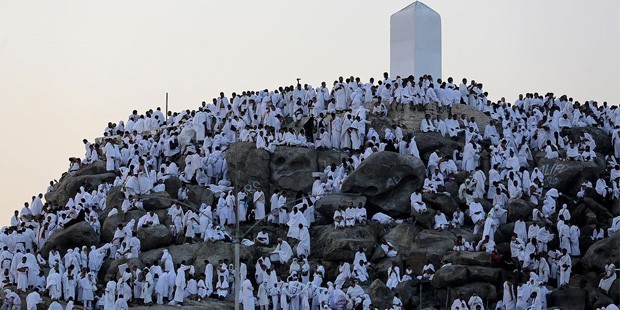
Arafah was the day on which Allah (SWT) perfected His religion, completed His favours upon His beloved Prophet Muhammad (PBUH), and approved Islam as a way of life.

Imam Ibn Kathir in his tafsir says:

“Imam Ahmad recorded that Tariq bin Shihab said, “A Jewish man said to `Umar bin Al-Khattab, `O Leader of the Believers! There is a verse in your Book, which is read by all of you (Muslims), and had it been revealed to us, we would have taken that day (on which it was revealed) as a day of celebration.’ `Umar bin Al-Khattab asked, `Which is that verse?’ The Jew replied:

“This day I have perfected for you your religion and completed My favor upon you and have approved for you Islam as religion.”

Umar replied, “By Allah! I know when and where this verse was revealed to Allah’s Messenger. It was the evening on the Day of `Arafah on a Friday.”

1. Fasting on the Day of Arafah:

The Day of Arafah fasting is highly encouraged and recommended for those not going on Hajj.

“Fasting on the Day of Arafah expiates the sins of the past year and the coming year.” (Muslim)

2. DU’AA OF ARAFAH: Saying this dua for the day of Arafah:

The Prophet Muhammad, peace be upon him, said of the Day of Arafah dua:

 “The most excellent dua is the dua on the Day of Arafah, and the best of what I and the prophets before me have said, is “There is nothing that deserves to be worshiped in truth except Allah, He is Alone and has no partner, to Him belongs the dominion and to Him belongs all praise, and He is All-Powerful over all things.'” (Muwatta)

لا إله إلا الله وحده لا شريك له ، له الملك ، وله الحمد ، وهو على كل شيء قدير

 3. Making Tahleel, Takbeer, Tahmeed and Tasbeeh:

It is a Sunnah of our Prophet (PBUH) to recite the Tahleel, Takbeer, and Tahmeed as many times as possible on the day of Arafah, and also on the days of Tashreeq (11th, 12th, and 13th of Dhul Hijjah).

Tahleel is to say “Laa ilaaha il-lal-laah”

Takbeer is to say “Allahu Akbar”

Tahmeed is to say “Alhamdulillaah”

Tasbeeh is to say “Subhanallaah”.

4. Seek forgiveness from Almighty Allah:

The Prophet Muhammad (PBUH) said:

“On this day, Allah, the most Exalted, descends to the nearest heaven, and He is proud of His servants on the earth and says to those in heavens, look at My servants, they have come from far and near, with hair dishevelled and faces covered with dust, to seek my Mercy. Even if their sins are as much the sand or the froth of the sea, I shall forgive them.”
First Ten Days of Dhul-Hijjah

Every year, the events of Hajj take place in a ten-day period, starting on 1 and ending on 10 Dhu al-Hijjah, the twelfth and last month of the Islamic calendar. Among these ten days, the 9th Dhul-Hijjah is known as Day of Arafah, and this day is called the day of Hajj.Muslims celebrate the festival Eid ul-Adha during Hajj.

This is the second holy festival in the year. Eid ul-Adha marks Allah asking the prophet Abraham, in a dream, to sacrifice his son Ishmael as an act of obedience to Allah.The first 10 days leading to the pilgrimage carry significant and meaningful milestones for Muslims in the 12th and final month of their lunar year.(Al-Hajj 22:28)

The majority of scholars agree that the “appointed days” are the first ten days of Dhul-Hijjah, because of the words of Ibn `Abbas (may Allah be pleased with him and his father): “The ‘appointed days’ are the first ten days (of Dhul-Hijjah).”

Fasting on these 10 days are beloved to Allah (SWT), and especially on the ninth of Dhul Hijjah, which is the day of Arafat because fasting on this day means our sins from the previous and coming year will be expiated. This practice is Sunnah for Muslims and highly recommended.

Dhul Hijjah is one of the most glorious months in Islam. Allah says:

“Indeed, the number of months with Allah is twelve [lunar] months in the register of Allah [from] the day He created the heavens and the earth; of these, four are sacred. That is the correct religion, so do not wrong yourselves during them. And fight against the disbelievers collectively as they fight against you collectively. And know that Allah is with the righteous [who fear Him]”. (Surah At-Taubah: 9:36)

As narrated by Hazrat Abu Bakr (R.A.), Prophet Mohammad (S.A.W.) said:

” The division of time has turned to its original form which was current when Allah created the Heavens and the Earths. The year is of twelve months, out of which four months are sacred: Three are in succession Dhul Qadah, Dhul Hijjah and Muharram, and (the fourth is) Rajab of (the tribe of) Mudar which comes between Jumada Al-Akhirah and Shaban.” (Sahih Al-Bukhari: 3197)

What is the best sadaqah in Islam?

The word ‘sadaqah’ literally means ‘righteousness’. In Islam, it refers to a virtuous deed or an act of kindness done without the expectation of getting anything in return. This voluntary charitable act does not necessarily have to be monetary aid. It can also be as simple as greeting someone with a smile or lending someone a helping hand. Sadaqah is a sign of sincere faith in the angels of Allah counting good deeds for mercy on the Judgement day.

While Sadaqah can be given in many forms, the best charity for illness is making dua for the ill person. Another form of Sadaqah that can be given to cure illness is sacrificing animals and donating the meat in the poor and needy. One can also give monetary aid to the community for treating one with blessings.

Being regarded as one of the most rewarding act, the power of Sadaqah comes from the intention of person performing it. Sadaqah can protect one from hellfire and benefit a person in this life. As per Sadaqah meaning, it is following the path of righteousness; hence, Allah protects his righteous subjects from misfortune and illness.

Types of Sadaqah

According to Sadaqah meaning, there are several types of charity in Islam that are listed below:

1. Offering dua

Giving Sadaqah can be as simple as making dua for someone, regardless of whether the person is praying for a loved one or a stranger in need.

2. Passing on knowledge

Spreading knowledge amongst the community or those who can’t afford to get it from somewhere else is also a form of Sadaqah.

3. Giving advice

Sadaqah can be given in the form of sage and reasonable advice to someone younger than the advisor.

4. A warm smile

A genuine smile can make up for a bad day at work or provide zeal to get through a tiring day. Therefore, smiling at a meeting, or while greeting and talking to others is also a type of Sadaqah.

5. Providing aid

A help with no hidden motives is the most generous gift anyone can give; hence is considered a form of charity.

6. Giving time

Time is among the most precious things in the world. Therefore, another major form of Sadaqah is to take time out for parents and significant people in one’s lives.

7. Tarbiyyah

Tarbiyyah refers to nurturing one’s kids. Making sure that the kids are brought up with good manners and values is an essential type of Sadaqah.

8. Being patient

Patience is a virtue that is highly essential to deal with problems. Being patient with others and having faith in Allah is an act of charity.

9. Having a good influence

One of the most important forms of Sadaqah is to advise misguided people influencing them to walk on the path of Allah.

10. Resisting evil deeds

Not doing or participating in any evil deeds like killing or hurting a living thing is also a form of Sadaqah.

11. Talking softly

Arrogance and rudeness are two things that should always be avoided. Instead, one should always speak kind words in a gentle tone.

12. Granting forgiveness

It is considered Sadaqah to grant forgiveness to those who ask for it with a sincere heart.

13. Being respectful

One should always show respect to both elders and youngsters.

14. Being happy for other

Being a part of others’ happiness without feeling envy or jealousy is also a form of Sadaqah.

15. Visiting the sick

It is a type of Sadaqah to visit the sick and take care of those in need of attention.

16. Removing harmful things from the path

One should remove harmful things such as stones or fallen branches from the road to decrease the chances of accidents.

17. Guiding someone

Guiding a misguided person on the right path is one of the biggest types of charity in Islam.

important of ramadan

During Ramadan, Muslims aim to grow spiritually and become closer to Allah and their loved ones. They do this by fasting and abstaining from pleasures like smoking, drinking and sexual intercourse between sunrise and sunset each day. Ramadan is also a time for unity and spiritual reflection and Muslims spend time praying, reciting the Quran and doing good deeds. They donate to charity, spend time with loved ones, and avoid lying, gossiping and fighting. 

Fasting is important during Ramadan as it allows Muslim to devote themselves to their faith, get closer to Allah and learn patience and compassion. It’s about nourishing your soul, rather than only focusing on your physical body. It’s also one of the Five Pillars of Islam which are the foundation of how Muslims live their lives (the others are faith, prayer, charity and pilgrimage to the holy city of Mecca).

Fasting is usually done by all Muslims except those who are sick, pregnant, lactating, menstruating, elderly or travelling. If you miss fasting days you can make up for them throughout the year. 

The fasting is done between sunrise and sunset. During this time, practicing Muslims are not allowed to drink water. Muslims usually wake up before dawn and eat a light meal known as suhoor. They drink plenty of water at this time to see them through the day. After the sun fully sets, the fast is typically broken with water and dates, followed by prayers and a meal called iftar.

About Laylatul Qadr (The Night of Power)


In the Qur’an, Laylatul Qadr is described as:

“We have revealed it (Quran) in the night of power. And what will explain to you what the night of power is? The night of power is better than a thousand months.” (Quran 97:1–4)


While the exact date of Laylatul Qadr is unknown, it is believed to be one of the odd-numbered dates in the last 10 nights of Ramadan. Most Muslims observe Laylatul Qadr on the night of the 27th.

Why Muslims Pray Five Times A Day ?

 The only thing that separates Muslims from non-believers is the prayers. It is the second pillar of Islam after the declaration of faith. Islam is based on five pillars and if one is missing then the whole building collapses.

How can someone who takes bath five times a day become dirty? The same applies to the five daily prayers; it cleanses and purifies the soul of a Muslim.

Salah softens the heart of a Muslim and it naturally prevents you from committing sins because it teaches and disciplines you to be humble and also reminds you of the existence of a supreme being. 

In Islamic tradition, Muslims perform five formal prayers at specified times each day. For people who miss a prayer for any reason, the tradition allows the prayer to be made up at a later time without it automatically counting as a sin that cannot be rectified..

Traditionally, prayers are said while standing on a small prayer rug, though using one isn’t required.

  • Takbir: Worshippers stand and raise their open hands to shoulder level, proclaiming Allahu Akbar (“God is great”).
  • Qiyaam: Still standing, faithful cross their right arm over their left across their chest or navel. The first chapter of the Quran is read, along with other supplications.
  • Ruku: Worshippers bow toward Mecca, place their hands on their knees, and repeat, “Glory be to God, the greatest,” three times.
  • Second Qiyaam: The faithful return to a standing position, arms at their sides. Allah’s glory is proclaimed again.
  • Sujud: Worshippers kneel with only palms, knees, toes, forehead, and nose touching the ground. “Glory be to God, the highest” is repeated three times.
  • Tashahhud: Transition into a seated pose, feet beneath them and hands on laps. This is a moment to pause and reflect on one’s prayer.
  • Sujud is repeated.
  • Tashahhud is repeated. Prayers to Allah are said, and the faithful raise their right index fingers briefly to proclaim their devotion. Worshippers also ask Allah for forgiveness and mercy.

If worshippers are praying communally, they will conclude prayers with a brief message of peace for one another. Muslims turn first to their right, then to their left, and offer the greeting, “Peace be upon you, and the mercy and blessings of Allah.”

The five daily prayers include: Fajr (sunrise prayer), Dhuhr (noon prayer), Asr (afternoon prayer), Maghrib (sunset prayer), and Isha (night prayer).

Each prayer has a specific window of time in which it must be completed. These timings are based upon the sun.

  • Fajr: This prayer starts off the day with the remembrance of God; it is performed before sunrise.
  • Dhuhr: After the day’s work has begun, one breaks shortly after noon to again remember God and seek His guidance.
  • ‘Asr: In the late afternoon, people take a few minutes to remember God and the greater meaning of their lives.
  • Maghrib: Just after the sun goes down, Muslims remember God again as the day begins to come to a close.
  • ‘Isha: Before retiring for the night, Muslims again take the time to remember God’s presence, guidance, mercy, and forgiveness.

Missing prayers is considered a serious lapse of faith for devout Muslims. But circumstances do sometimes arise where a prayer time may be missed.

Tradition dictates that Muslims should make up their missed prayer as soon as possible or at the very least recite the missed prayer as part of the next regular salat.

Principles of Islam

Narrated Ibn ‘Umar:

Allah’s Messenger Muhammad (ﷺ) said: Islam is based on the following five principles:

1. To testify that none has the right to be worshipped but Allah and Muhammad is Allah’s Messenger (ﷺ).

2. To offer the (compulsory congregational) prayers dutifully and perfectly.

3. To pay Zakat (i.e. obligatory charity) .

4. To perform Hajj. (i.e. Pilgrimage to Mecca)

5. To observe fast during the month of Ramadan.

(Sahih al Bukhari )

Important Word for Muslims

All praise is due to Allah, we praise him and seek his help and forgiveness. We seek refuge in Allah from the wickedness of our own selves.

Whomsoever Allah guides, none can lead astray, and whomsoever Allah sends astray, none can guide.

I bear witness that there is no god but Allah Alone and he has no associate in His Justice and actions.

He legislate the true religion for mankind and guide them to it. Made law easy for them.He never commands them to what is burden on them.

He said: ” Allah burdens not a person beyond his scope” ( Surah Al- Bakarah 286)

And I bear witness that Muhammad is a slave of Allah and His messenger. He (saw) is the best above all of His creations. He sent him to all mankind.

Allah had guided mankind through him(saw). Guided the Ummah to all benefits and happiness in the world and hereafter.

And warned them against all evil in the world. May Allah send peace unto him, his family, companions and those who followed them and walked on their way to the day of Ressurrection.

Indeed, a true muslim is the one who seeks the law of Allah and His Messenger(saw) in all of his matters whether it is saying or actions.